
Special Exhibition: On Stage
This exhibtion was on display during August 2025
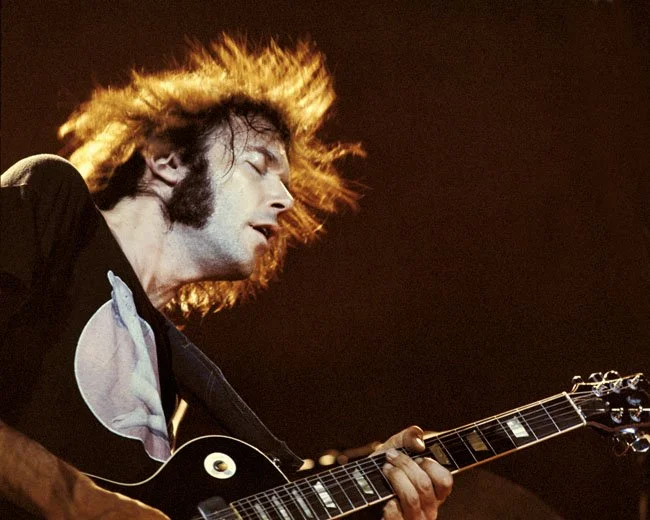
Neil Young. Berkeley Community Theater. 1976.
On Stage: 50 Years of Concert Photography Exhibition
August 2-31, 2025
Opening Reception Saturday August 9th. 2-5pm.
I am very pleased to be presenting for the first time a collection of my concert photographs made over the last 50 years. This 28 print show features 28 14 inch (wide/tall) prints including thumbnail concert poster, a baggie of tickets and other artifacts..
Coming of age in Northern California, meant many things, one of those was the ability to drive the 140 miles to the San Francisco Bay area to go to concerts. My friend since 5th grade, Rick Lopez, was often my companion. My first shows were to see some of my real musical heroes, Neil Young at Winterland in 1973, Bob Dylan and the Band in February 1974, George Harrison at the Cow Palace, and CSNY at the Oakland Coliseum Stadium, all in 1974. 1975 brought the SNACK Benefit at San Francisco’s Kezar Stadium in Golden Gate Park with a who’s who of performers including Neil Young, Bob Dylan and Joan Baez.
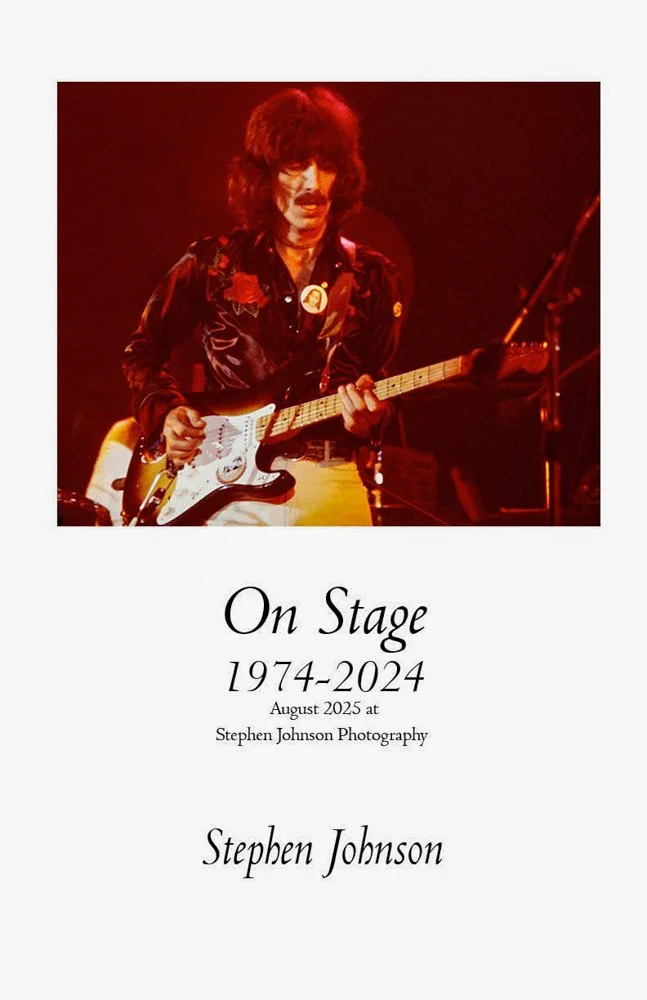
On Stage gallery handout.
It was a big deal for a small town boy to see many Rock and Roll legends perform, for real, right before my eyes. As it happens, I took my first photography class just six months after that March 1973 Neil Young show. I didn’t even own an adjustable camera until that fall. That summer of 1973, I fell for a girl who happened to own a nice camera and loaned it to me, which set me up nicely for a fall photo classe I was planning on taking.. By the time the George Harrison tour came to the Bay Area on November 6, 1974, I had been seduced by photography. I had not only acquired my own camera, and a few lenses, but had also been developing my own film, including Ektachrome slides, having then worked for a year slide copying/developing, and as a Lab Assistant in the Photo Department of my junior college. By then I had learned about pushing film as well (under-expose the film by rating it at a higher ISO and and over-developing it to compensate), so was able to custom develop the Harrison rolls to get better/sharper exposures.
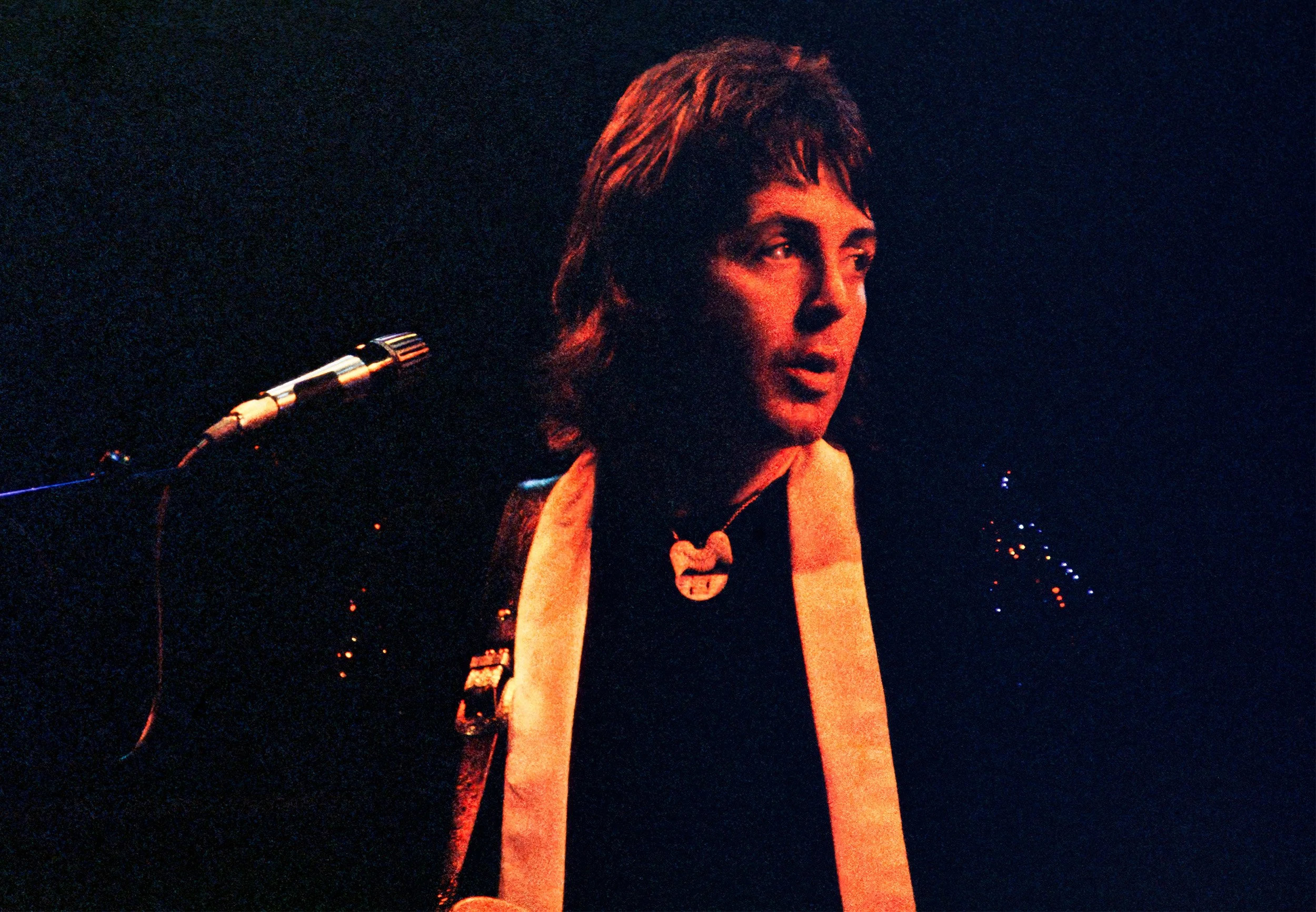
Paul McCartney. Cow Palace San Francisco/Daly City. 1976.
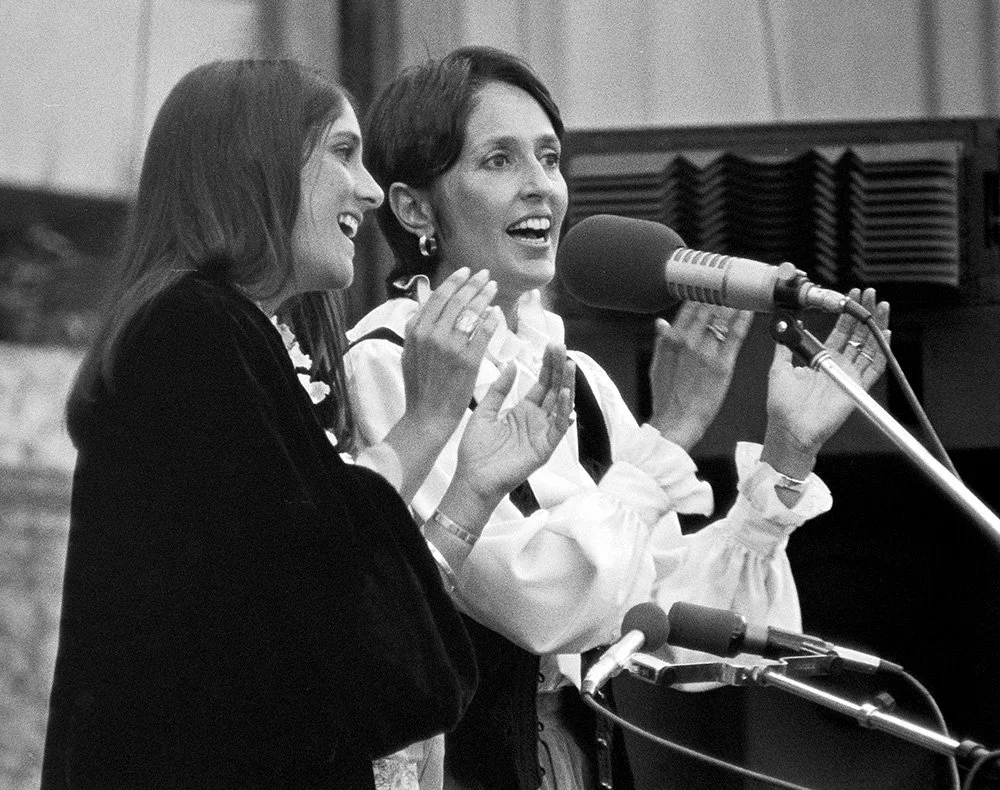
Mimi Farina and sister Joan Baez. Bread and Roses Festival. 1977.
The concert photography opened up a new world of photographic possibilities, making even more real the experience of seeing these famous performers and photo-recording the experiences, even two Beatles. By then I had become the family photo archivist, gathering rolls of scattered negatives together, copying/enlarging prints for my grandmother so she could see them better, all the while trying to preserve the evidence of family history and real records of the people and some experiences. For me, photography was ever more becoming a way of holding memory, keeping precious memories alive, and connecting to the time before my parents divorced. The concert experiences and photographs operated on many levels, the famous made even more real by the photographs, making these celebrities real people, seen with my own eyes, and of course, all of the wonderful music I was hearing.
It's a bit strange, but as I’ve been going through the shows I’ve seen, it’s amazing how much has been lost in the flow of time. The shows I photographed are the best remembered. Even shows I now know I must have seen, have mostly collapsed down to the acts I photographed. I don’t like this disconnect between memory without photography, but it is true. The photographs have been a living encouragement of the memory. It’s part of what makes photography so powerful, it does act on our memory, and make those photographed events more vivid. It’s not surprising, the aid of concrete evidence has weight. But there is something larger tapped into here about the role photography plays in our lives, our hearts, and our sense of how we’ve lived. Photogaphy is a powerful truth teller and an ally in appreciating our lives. It is part of what makes the “we were there” snapshots sought after.
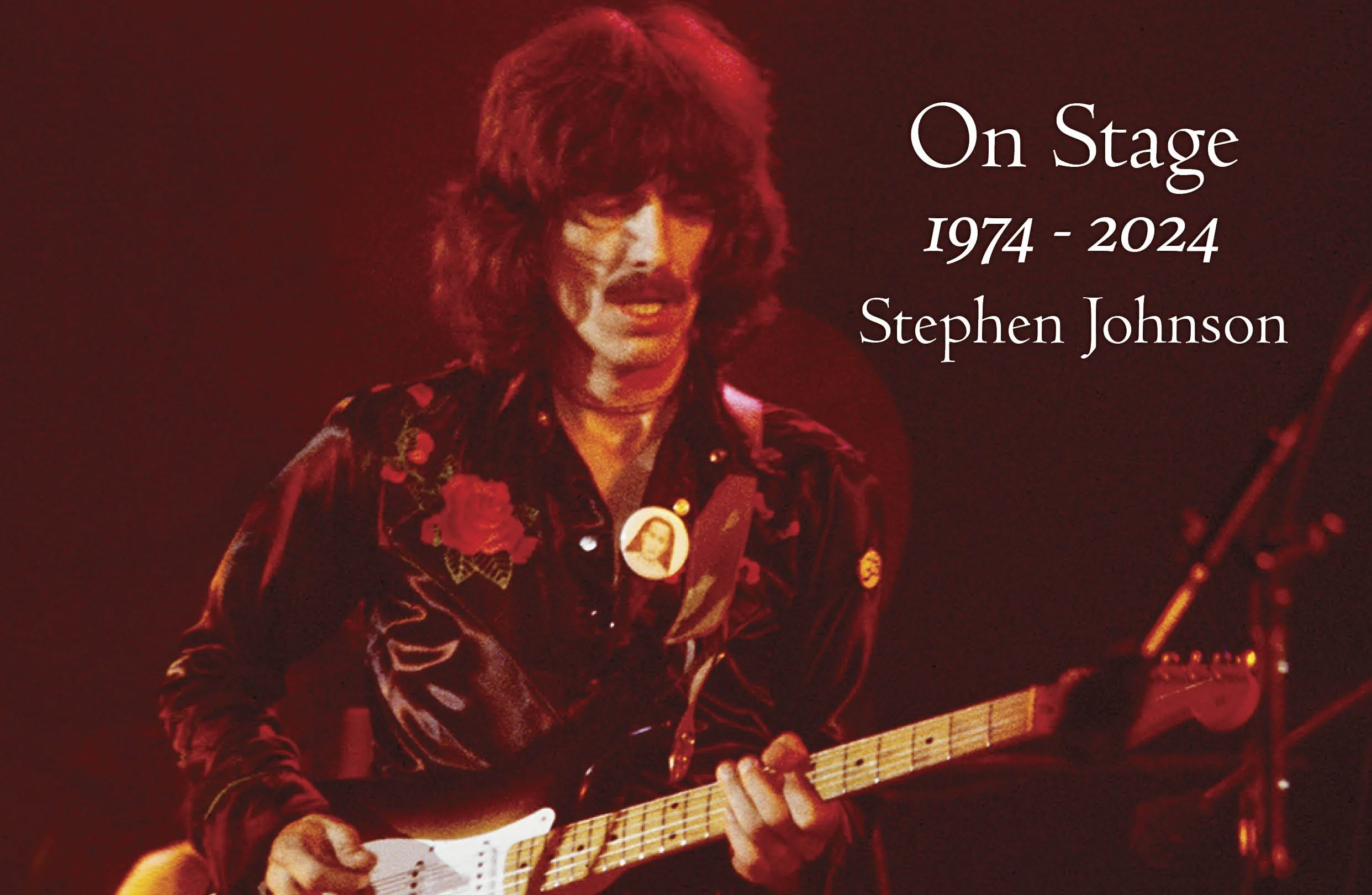
I have sold many prints of these photographs over the years, have even licensed a few, but have not, until now, gathered them into exhibition of work. It is good to pull these images together, and take a walk back down the wonder of my growing love of photography, the connection to these rock stars, and my own pride in my evolving craft.
There is also a curious gap in my concert photography from 1978 to 2003. Although it became harder to bring cameras into concerts during the last of this period, the only explanation I can think of is that I got very busy with building family, home, and some big projects, from the At Mono Lake show, the The Great Central Valley, to With a New Eye: the Digital National Parks Project. This gap is also where the photographs switch from film to digital. All very curious to me.
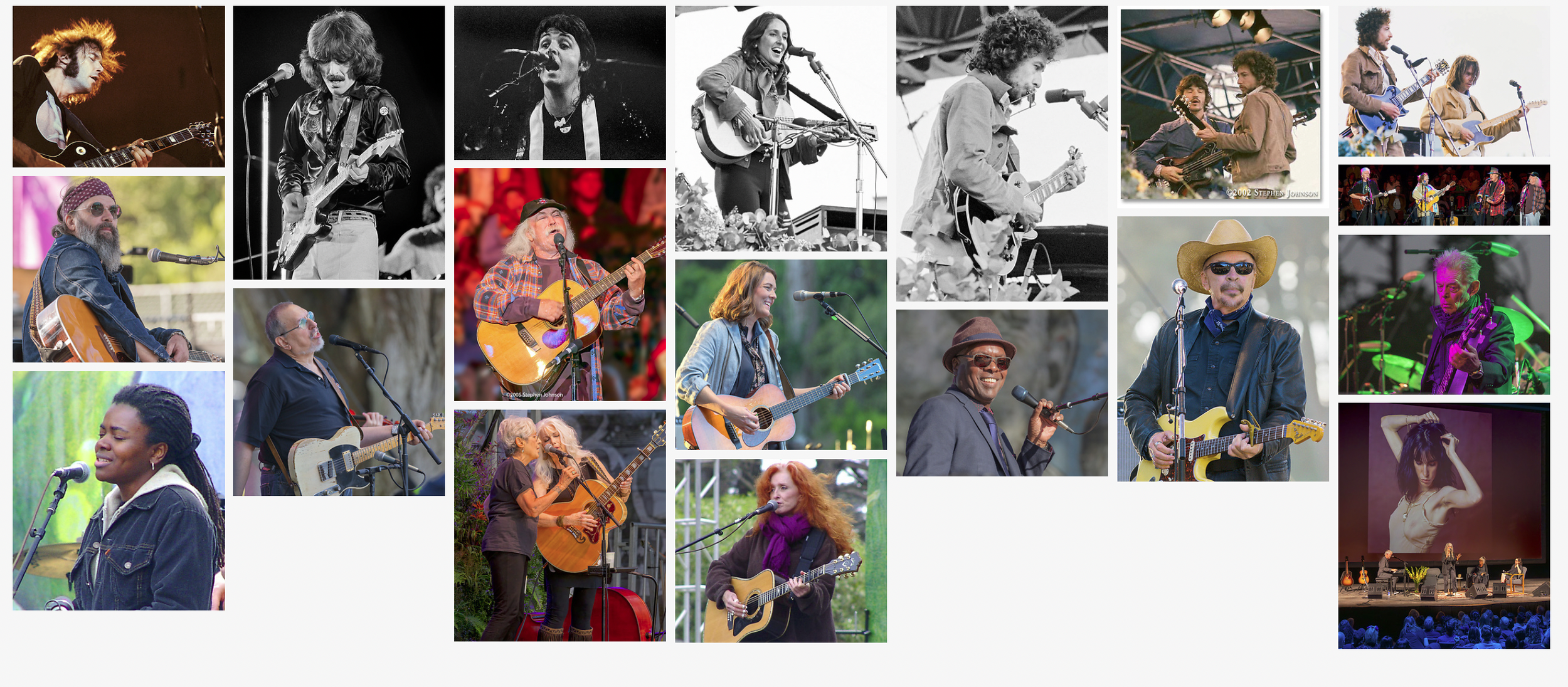
Concert Photograph Gallery with Print Purchase Options.
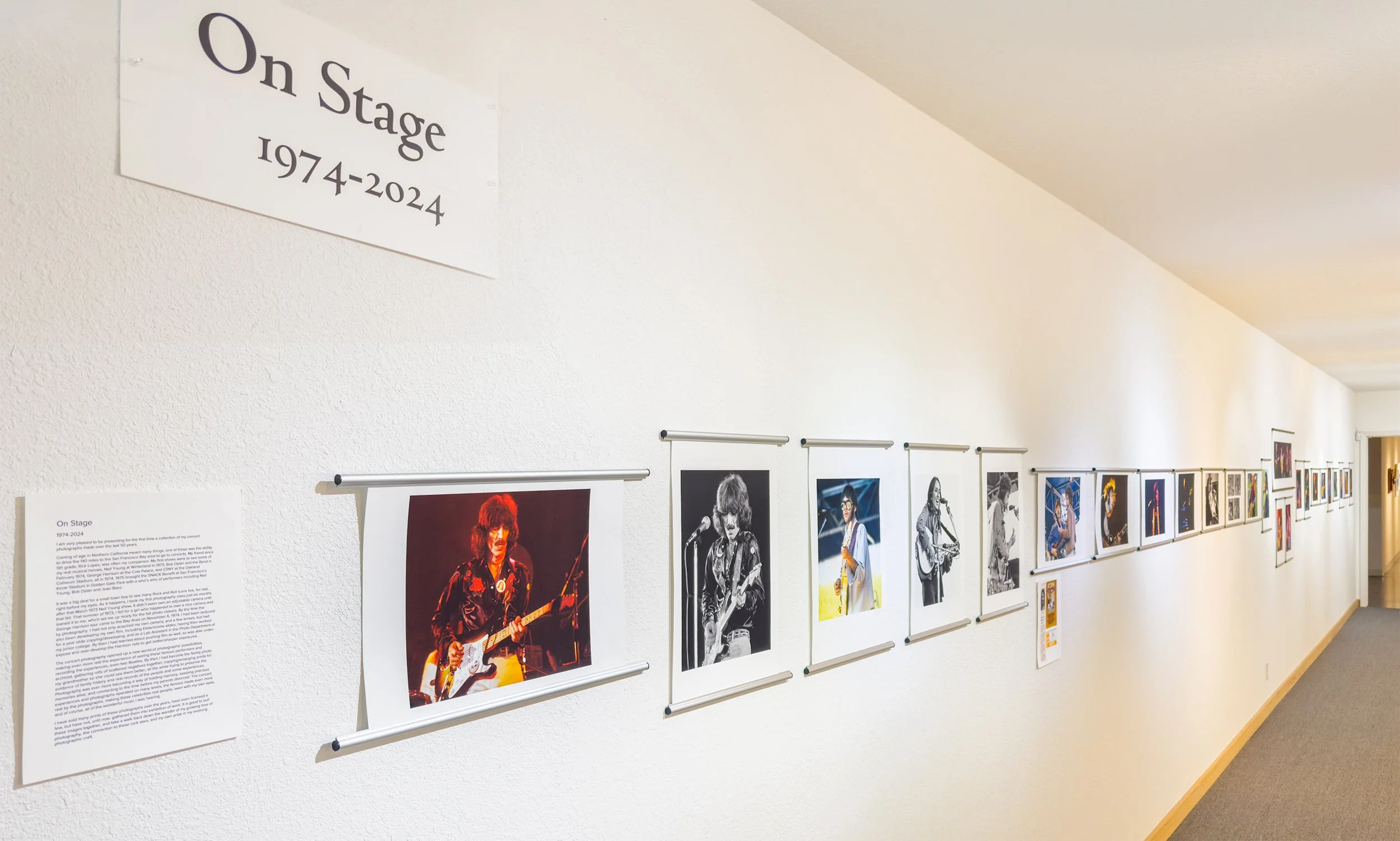
On Stage Install. 2025. Stephen Johnson Photography. Pacifica Center for the Arts. Pacifica, California.
Neil Young. Berkeley Community Theater. 1976. 35mm Proof Sheet, Roll 1.
From my November 2005 Newsletter
THE VIEW FROM HERE
Photography, Art, Inspiration and Rock and Roll
Music came first, and in some ways remains more primal. Music led me to photography. There was something about my emotional reactions to the world needing to find creative outlets. I started playing guitar when I was 12, by 14 I bought my first piano, by 17 my first loan bought a Fender Rhodes electric piano. My freshman English teacher, Wayne Denno, revealed the beauty of poetry, my teenage poetry quickly evolved into music. It was all about expression and living a creative life.
The music and songwriting never stopped, but photography became the career focus. The first real photography income bought my long-dreamed-for Martin D41. It was only natural for photography and rock and roll to mesh. Of course, it was much easier to photograph concerts in the 1970s. You could actually bring cameras into the shows.
The photographs were not easy to make. Film was not as sensitive as was needed. Developing my own Ektachrome was critical, as I substituted a high energy black and white developer, Acufine, for the first developer in the E4 process, and was able to push the film to well over 1000 ISO. That was a big deal in 1974.
It’s a bit easier now, the Canon 5D I just used went to 1600 ISO easily, and although the darker values had noise, the upper midtones and highlights were relatively clean. The technology has advanced dramatically. But of course, shadow detail still seems to only come at the native ISO of the device. Some things don’t seem to change. My own concert photographs of value were hard fought for. Endless shots of famous musicians eating their microphones just didn’t cut it. Mid-word singing with strained and weird expressions were not usually very attractive either. But I learned. I learned to look and watch, wait for the right moment and see what I could do.
Most of my rock and roll work is from the seventies, and my photography has grown in so many ways since that time. But the archive does hold some precious images, and Neil Young’s Bridge Concert this year with my images helping to raise money for the school has inspired me once again to do some more work.
We’ll see where it goes, but some of the archive work is displayed in this month’s newsletter, making a kind of theme to November, in honor of rock and roll, fund raising through photography, and the inspiration that links music’s passion with photography’s vision.
excerpted from “Essays Along the Way” a work in progress
FEATURED PRINT
November 2005
It seemed miraculous to be going to see a Beatle. I was 19, my friend Rick Lopez and I waited in line for hours to rush the stage for a good place to stand and photograph. It was a great show. George did John Lennon’s “In My Life” as one of his favorite songs by one of his dearest friends. His voice was hoarse from touring, but the concert was splendid. These photographs of George mean even more to me now that he is gone. It’s precious to have them.
This photograph is from custom hand-processed 35mm Ekatchrome, scanned with the Imacon Precision II scanner and printed on the Epson 2400.
Earthquake Relief
50% of the proceeds from this print will be donated to the Red Cross to aid victims of the Pakistani Earthquake.